
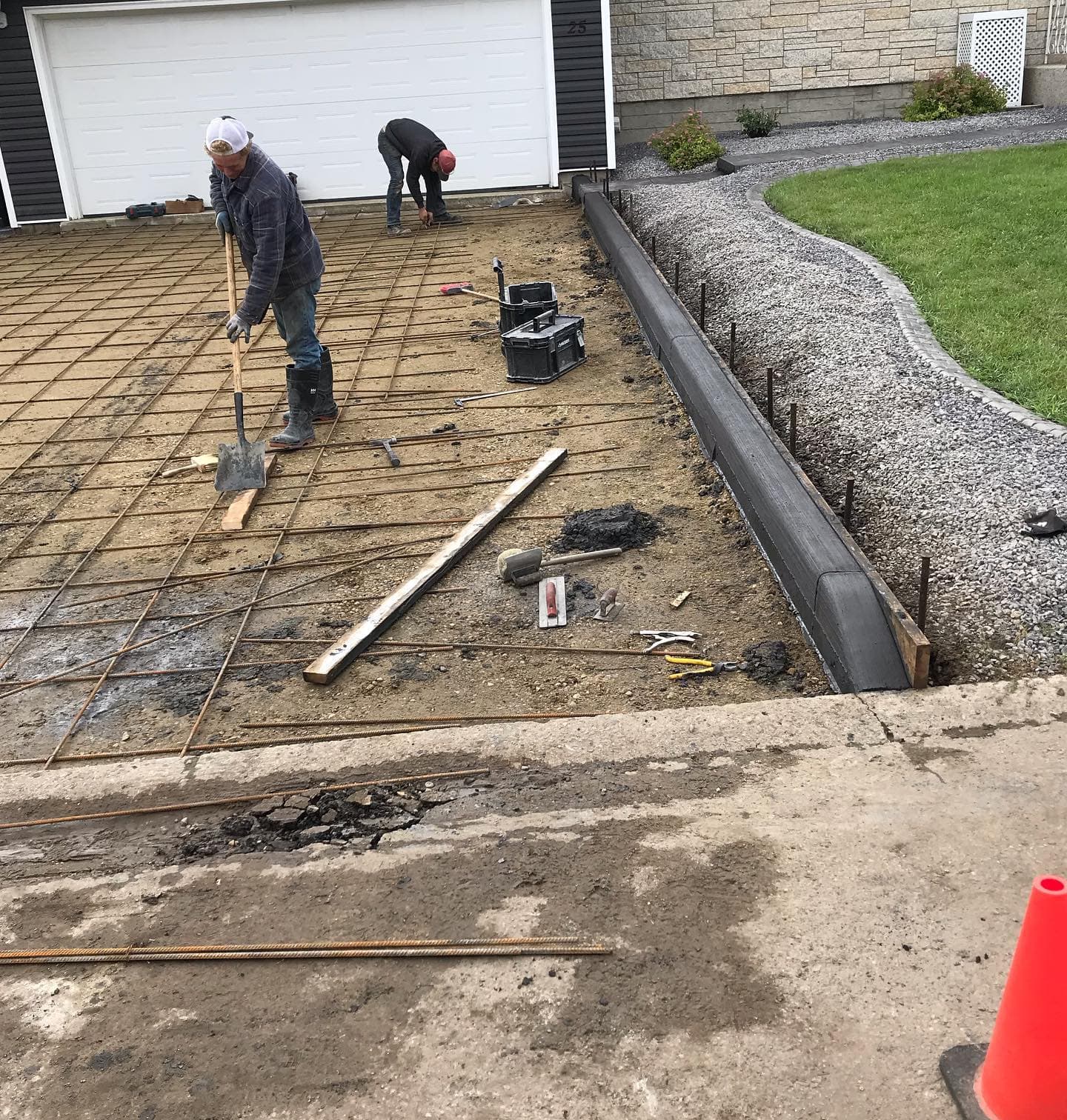
Read the existing driveway
A driveway replacement begins with the existing site: access, drainage, surrounding edges, and how the surface meets the garage or street.
Cracks and settlement can tell part of the story, but the site context matters more than a photo of a single damaged spot.
Notice where water collects, how vehicles enter, and whether curbs, landscaping, gates, or neighbouring work affect the replacement.
Bring useful information
Photos, rough dimensions, and any history of the existing slab give the discussion a practical starting point. Let the contractor know what needs to remain accessible while work is happening.
It also helps to identify planned changes such as a wider parking area, new walkways, garage work, landscaping, or drainage improvements.
The first conversation becomes more useful when it covers the full arrival sequence rather than treating the driveway as an isolated rectangle.
Think beyond pour day
The finished surface should suit the way the home is used every day, not only how it looks immediately after placement.
Joint layout, edges, transitions, and the selected finish all contribute to how a driveway reads over time and how it connects to the property.
A well-scoped project creates a practical surface for vehicles and a clear first impression for everyone arriving at the home.